
SMART, PESTEL and SWOT Analysis - The Holy Grail of Planning
Rather than betting against the fragility of existence by a misconstrued assumption of easy-go-get-lucky safety based on a false reliance on the System, it is safer and more reasonable to take responsibility to safeguard oneself against life’s changes. The best preparation is putting hope into the action of planning, whilst preparing against the worst.
Planning is the foundation of what is taught in every management programme. Luck meets a prepared and proactive mind: a mind which does not procrastinate but makes hay while the sun shines by seizing every opportunity to do what is worthwhile while he still can.
A combination of and reflective use of SMART, PESTEL, and SWOT analyses enables organisations to continually manage their enterprise. By using a continual feedback loop from customers, organisations are better able to improve on services and to better navigate the complexities of global and local occurrences and to develop a more engaging and streamlined process.
We may see the notion of planning and preparation as very basic tenets which should be realised and acted upon by everyone. In spite of this common knowledge, its application is quite uncommon because of the personal responsibility which is involved.
I shall describe some common analytical steps, which I have employed in my own personal activities and have proved useful towards achieving success. These are taught in management school and courses but if applied in everyday life it would aid everyone to be better prepared against chaos.
Make your Goals SMART

While we have identified our goals, it is important to break the process down in chunks to enable its implementation in a non-overwhelming manner.
SMART goals were developed by George Doran, Arthur Miller and James Cunningham they have been adopted in management. The term, SMART is an acronym that stands for Specific, Measurable, Achievable, Relevant, and Time-bound. Here is a breakdown of each component:
Specific: Goals should be well-defined and clear. They should answer the ‘what,’ ‘why,’ and ‘how’ of what you want to achieve. For example, “I want to lose 10 pounds in the next three months by exercising and eating a healthier diet.”
Measurable: Goals should be quantifiable, so that progress can be tracked and measured. For example, “I will track my weight loss progress every week and aim to lose 2-3 pounds per week.”
Achievable: Goals should be challenging but attainable. It’s important to set goals that are realistic and within your capabilities. For example, if you’ve never exercised before, setting a goal to run a marathon in three months is likely to be unachievable.
Relevant: Goals should be relevant to your overall objectives and aligned with your values. For example, if your overall objective is to live a healthier lifestyle, setting a weight loss goal is relevant.
Time-bound: Goals should have a specific deadline for completion. This helps to create a sense of urgency and helps to track progress. For example, “I will achieve my weight loss goal of 10 pounds in the next three months.
PESTEL: Watch out for the Hawks!
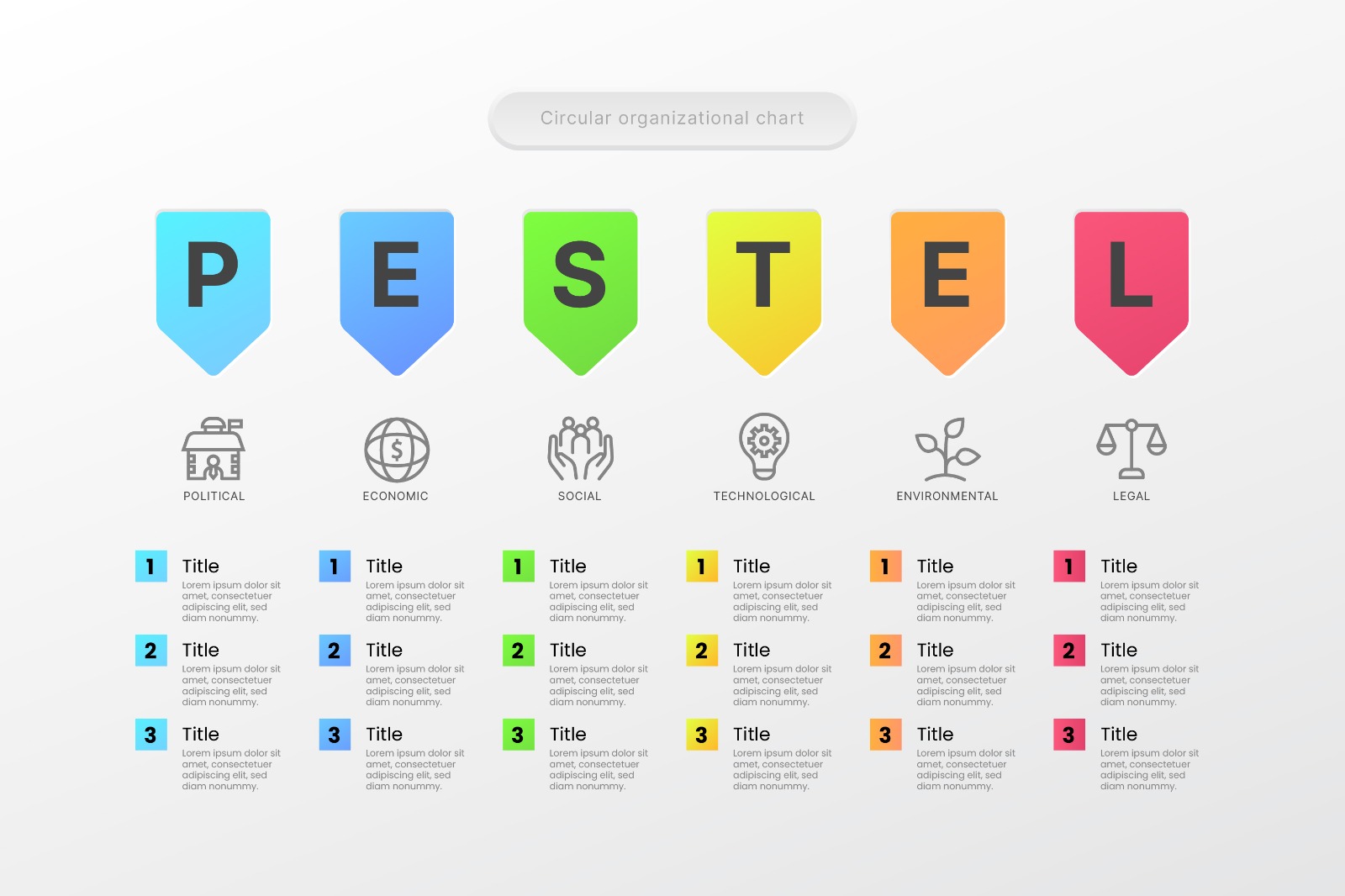
Chaos usually happens when we let down our guard against risk. A simple way of determining what sort of personal or organisational risk to guard against is to analyse where the risk comes from. Francis Aguilar, a professor in strategic planning, used the acronym PESTEL as a method to identify and prepare against external risks.
The acronym PESTEL stands for Political, Economic, Sociocultural, Technological, Environmental, and Legal. We can use it to reduce risk while working through the ordeals of life.
Here’s a brief explanation of each factor:
Political: This refers to government policies and regulations.
Economic: This factor looks at the overall economic conditions and trends such as inflation, interest rates, exchange rates and economic growth.
Sociocultural: This factor considers the social and cultural factors, including lifestyle trends, which may create dysfunction.
Technological: This factor examines the technological advancements that could impact day-to-day living.
Environmental: This factor considers how the natural environment can impact our lifestyle and includes factors such as climate change and natural disasters.
Legal: This factor examines the laws and regulations which impact our lives, such as health and safety regulations, labour laws, etc.
By analysing each of these factors, we can gain a better understanding of the external environment and make informed decisions about our lives.
SWOT: Guard Against the Internal Enemy
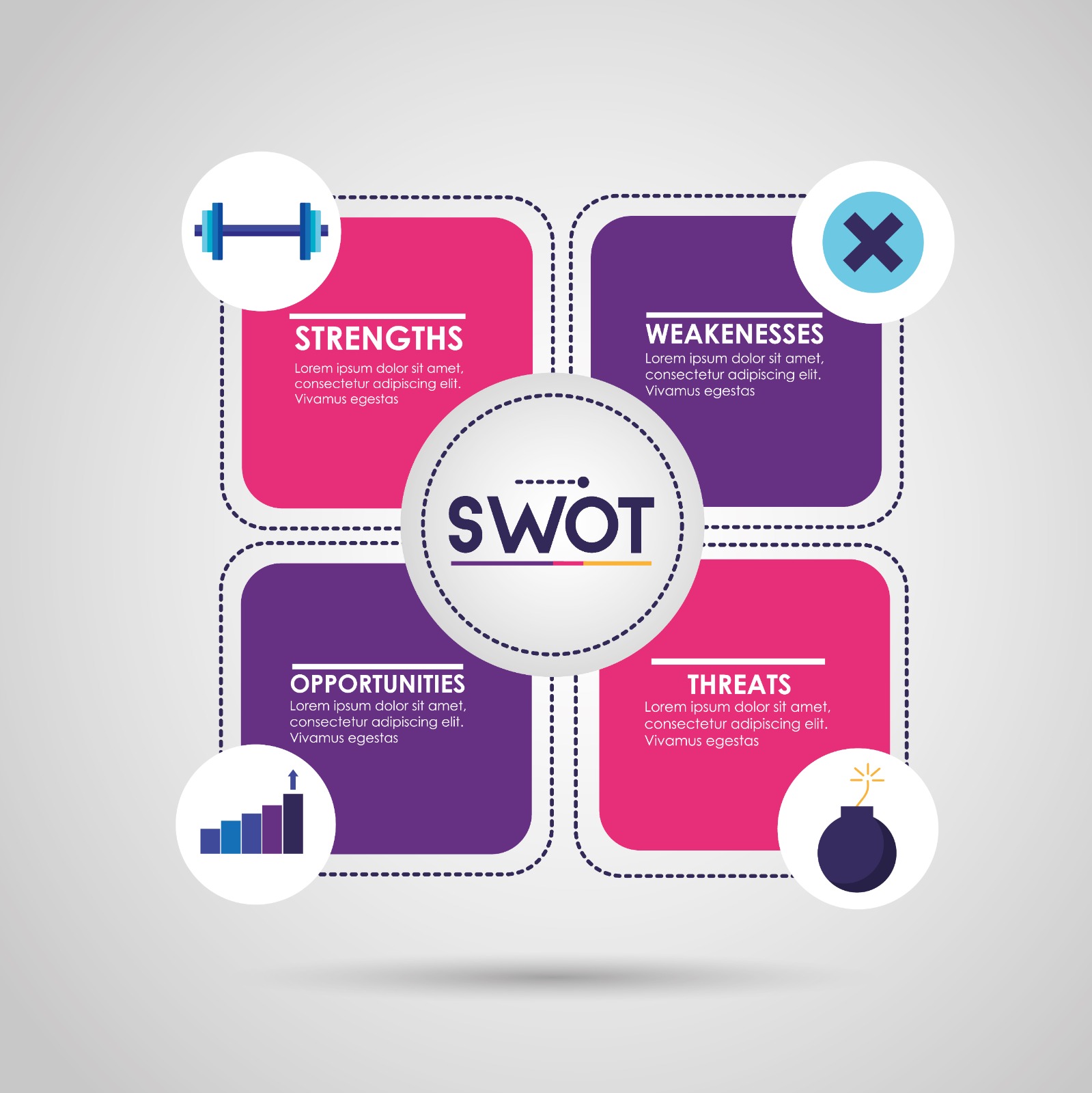
Using these tools helps us to understand where we are in our Journey Back. But we also have an internal enemy, which is ourselves. So, another useful tool, accredited to a number of business gurus in the 1960s, called SWOT analysis, could assist self-reflection and awareness and enable us to better prepare against the tides of time.
The acronym SWOT stands for Strengths, Weaknesses, Opportunities, and Threats. This acronym is used in problem-solving and decision-making and works towards mapping out the best and most practicable path of survival and thriving.
Here is a brief explanation of each component:
Strengths: This refers to the internal factors that give individuals, communities or organisations an advantage, a potential which can be further explored. These can include reputation, proprietary technology, talent, strong financial position and uniqueness.
Weaknesses: This looks at the internal factors which put an individual, community or organisation at a disadvantage. These can be a lack of certain educational qualifications or a lack of confidence in certain respects.
Opportunities: This factor looks at the external factors that could create new opportunities for individuals, communities and organisations. These can include things like changes in government policies, emerging grants, or new technological know-how.
Threats: This looks at the external factors which could negatively impact individuals, communities or organisations. These can include things like changes in government regulations, increased economic downturns or natural disasters.
Applying SMART, PESTEL and SWOT to Manage Risk
By a combination of these techniques, we can gain a better understanding of our external and internal environment and develop a more effective plan to better prevent chaos from happening to us through the gradual implementation of these techniques in risk control processes.